
2026-08-21 · Carlos Mendoza
Water Damage Restoration Timeline: What to Expect Day by Day
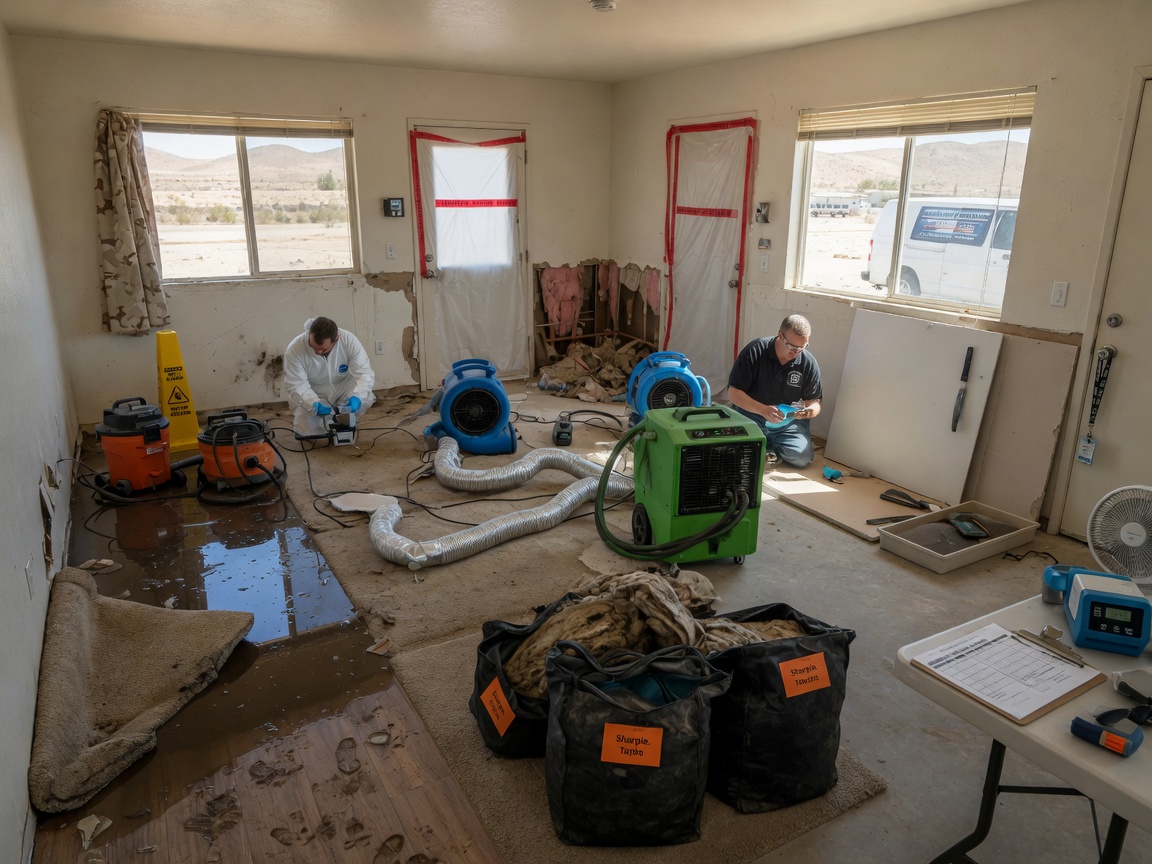
The two questions everyone asks are how long will this take and is what is happening normal. Most people have never been through this before, and a house full of roaring equipment for several days is unsettling when you do not know whether it is meant to be like that.
Short answer: extraction on day one, drying typically three to five days, repairs after that. Here is what each stage actually looks like.
A Note on Categories and Classes
You will hear these words and they mean different things.
Category describes how contaminated the water is. Category 1 is clean supply water from a pipe or supply line. Category 2 is grey water from appliances, with some contamination. Category 3 is black water — sewage, or anything that crossed ground outside. Category drives what can be saved: with Category 1 most things dry in place, with Category 3 porous materials come out.
Class describes how much water there is to evaporate and how much material absorbed it. Class drives how long drying takes and how much equipment goes in.
These are the categories defined in the IICRC S500 standard, which is the industry reference for water damage restoration. A crew that can tell you which category and class your loss is has assessed it properly.
Day 1: Response, Extraction and Setup
The longest and most active day.
Assessment. The source is confirmed stopped, electrical hazards isolated, and the water classified. Meters and thermal imaging map where the water actually went — nearly always further than it looks, because it moves behind baseboards, under cabinet kickboards, up wall cavities and along joists.
Extraction. Standing water is pulled out with truck-mounted and portable units. Carpet is usually lifted so water is not left trapped against pad and subfloor; on a clean water loss the carpet often stays and the pad is discarded.
Removal of what cannot be dried. Saturated insulation and carpet pad come out — neither dries reliably in place. Where water is sealed inside a wall cavity, sections are opened so air can reach it. This should be where the meters say, not where it looks wet. If someone is opening walls without having taken readings, ask why.
Equipment placement. Air movers directed at wet surfaces, dehumidifiers to pull the moisture out of the room air. Reference points are recorded so the same spots can be read every day.
By the end of day one there should be no standing water anywhere and equipment should be running.
What you will notice: it is loud, and it will be warm. Air movers and dehumidifiers put out real heat. This is normal and the equipment needs to run continuously — please do not switch it off overnight, however tempting. Each hour off adds to the total.
Days 2 to 4: Drying and Daily Monitoring
The quiet phase, and the one where people get impatient.
Someone should visit every day to take readings at the same reference points, check the equipment, and adjust placement based on what the numbers show. If readings in one area have stalled, that usually means moisture is trapped somewhere and the plan changes.
Expect to be shown the numbers. A good crew will tell you where readings started, where they are now, and how far there is to go. If nobody is taking daily readings, or nobody can tell you the numbers, that is the thing to question. Drying by calendar rather than by measurement is how jobs end in a mold call six weeks later.
Why it takes days rather than hours. Water has to migrate out of the inside of materials to the surface before it can evaporate, and that happens at its own pace. You cannot rush it much by adding more equipment past a point.
In dry inland California air, surfaces will feel completely dry by day two while wall cavities and subfloor are still wet. This is exactly the trap, and it is why readings matter more than touch.
Days 3 to 5: Final Readings and Equipment Out
Drying is finished when materials reach dry standard — meaning they read comparable to unaffected materials of the same type elsewhere in the building, rather than hitting a universal number. Comparing against a reference area in your own house is the correct method, because normal moisture content varies by material, building and climate.
Equipment comes out, final readings are recorded, and you should get a written drying log showing the progression from start to finish, plus photographs. Keep this. It is what your insurer wants and what proves the building was returned dry.
Typical range: three to five days. Longer when a slab is involved, since concrete releases moisture slowly; when hardwood is being dried in place; when the loss was Class 3 or 4 with a lot of saturated material; or when the water sat for days before anyone found it.
After Drying: Repairs
This is a separate phase and it is where the timeline becomes unpredictable, because it depends entirely on how much came out. Replacing a section of drywall and some baseboard is quick. Replacing flooring throughout, cabinetry and a ceiling is a construction project with its own schedule, and often waits on insurance approval and material availability.
Nothing should be closed up until the final readings confirm dry. Sealing a damp cavity behind new drywall is the single most expensive mistake available at this stage.
When Sewage Is Involved, It Is Different
A Category 3 loss adds stages before drying can start: containment with negative air, removal and disposal of all porous contaminated materials, then cleaning and antimicrobial treatment of remaining hard surfaces. Expect the job to run longer and to involve more removal. See sewage backup cleanup.
Things That Legitimately Extend the Timeline
- Slab construction — concrete gives up moisture slowly
- Hardwood floors being dried rather than replaced
- Plaster and lath in older homes, which holds water far longer than drywall
- Multi-layer flooring, where water is trapped between layers
- Delayed discovery — water that ran for days before anyone noticed
- Contaminated water, which adds removal and cleaning stages
- Coastal humidity, which slows evaporation compared with inland conditions
What Should Prompt a Question
- Nobody is taking daily moisture readings
- Nobody can tell you the actual numbers when you ask
- Equipment is pulled on a set day rather than when readings say dry
- Walls are being opened without readings to justify it
- You are told it is dry because it feels dry
- Repairs start before final readings are recorded
- You are not offered a written drying log at the end
None of these are exotic. They are just the difference between drying a building and appearing to.
The Short Version
| Stage | Typical timing | | --- | --- | | Extraction and equipment set up | Day 1 | | Drying with daily monitoring | Days 2–4 | | Final readings, equipment removed | Days 3–5 | | Repairs | Varies with scope |
If you are at the start of this, the most useful thing is simply to begin — the timeline runs from when extraction starts, not from when the water arrived. Our line is answered 24 hours a day, and see the first 24 hours after a burst pipe if it has just happened.