
2026-08-21 · Carlos Mendoza
Mold Growth After Water Damage: How Fast It Spreads and How to Stop It
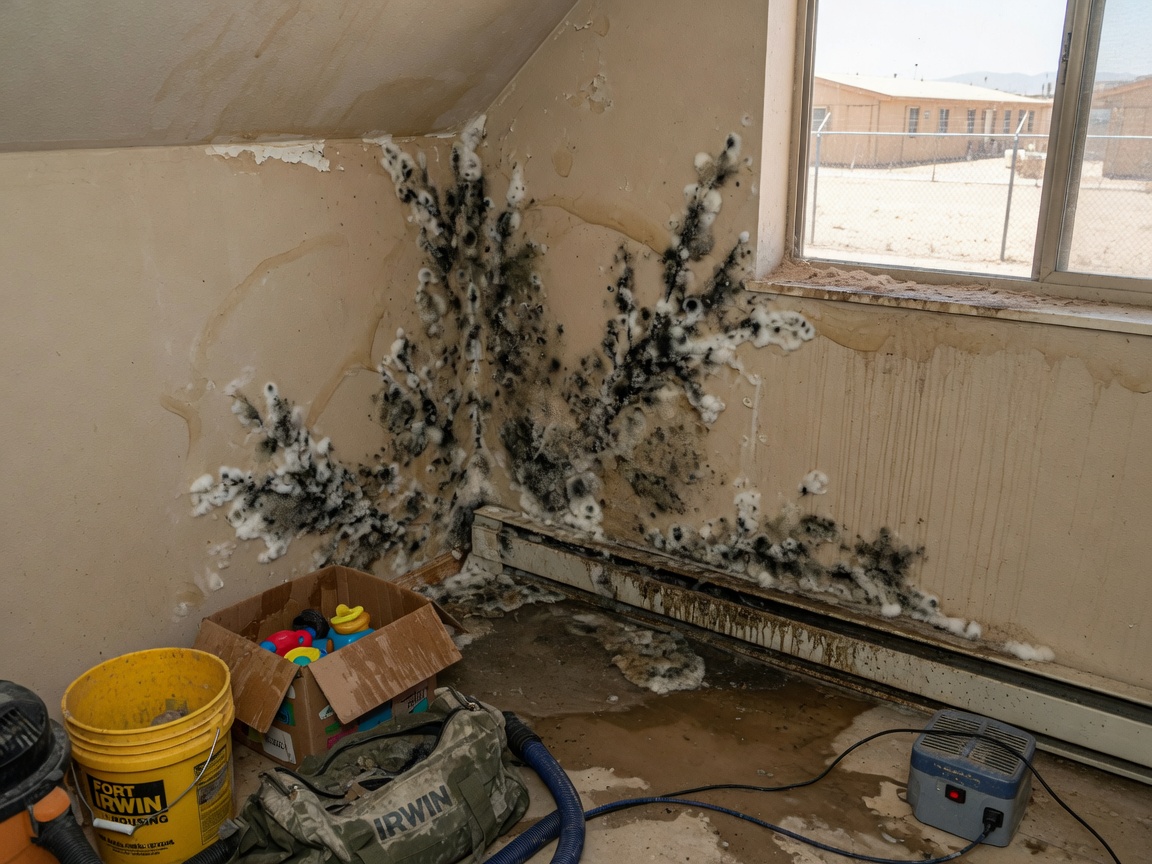
Every restoration company repeats the same number: mold can begin growing within 24 to 48 hours of water damage. It is worth understanding why that number exists, because it is the entire reason water removal is treated as an emergency rather than something to schedule for next week.
What Mold Actually Needs
Three things, and after a water event you are supplying all three:
- Moisture. The one variable you can control.
- A food source. Almost everything a house is built from qualifies — drywall paper, wood, carpet backing, insulation facing, dust, wallpaper paste.
- A workable temperature. Ordinary indoor temperatures are ideal.
Spores are already present in every building on earth, floating in the air and settled in dust. They are not the problem. Wet material is the problem, because it turns dormant spores into active growth. This is why remediation that focuses on killing spores rather than removing moisture does not work: you cannot make a building sterile, and you do not need to. You need to make it dry.
The Realistic Timeline
First 24 to 48 hours. Spores on damp organic material begin germinating. Nothing is visible yet. This is the window in which the whole outcome is decided.
Days 3 to 7. Colonies become visible — discolouration along baseboards, spotting on drywall, patches on the underside of flooring. Musty smell usually arrives around now, and often before anything is visible, because the odour comes from compounds released as mold metabolises.
Week 2 onward. Growth spreads through the material rather than sitting on it. On porous materials such as drywall and insulation, hyphae penetrate the full thickness, which is the point at which surface cleaning stops being an option and removal becomes necessary.
None of this is precise — material, temperature and how wet things got all shift it. But the shape is reliable: the first two days matter enormously, and after a week you are in a different and more expensive job.
Why Dry Desert Air Does Not Protect You
This is the local misconception worth correcting, and it costs High Desert homeowners real money.
The ambient humidity outside your house is irrelevant to what is happening inside a wall cavity. What matters is the microclimate against the wet material. A saturated stud bay behind intact drywall is a sealed, humid pocket regardless of whether it is 8% humidity in the yard.
In fact, the dry air here actively makes the mistake more likely, because it dries surfaces very quickly. Within a day the wall feels fine, the carpet feels fine, everything looks resolved — and the subfloor and the cavity behind are still wet. People stop drying at exactly the point they should be measuring. Then six weeks later there is a musty smell and a stain, and the job that would have been three days of equipment becomes demolition and rebuild.
Trust a moisture meter, not your hand. This is the single most useful thing in this article.
Two local factors make it worse. Evaporative coolers add moisture to indoor air by design, so a swamp cooler running while a building is trying to dry works against you. And the big day-to-night temperature swings out here drive condensation against cooler interior surfaces, which can re-wet materials overnight that seemed dry at 4pm.
Two Mistakes That Make It Worse
Mistake one: reaching for bleach. Bleach is largely the wrong tool for mold on porous materials. Its water content soaks into drywall and wood carrying the mold food source deeper, while the chlorine stays at the surface. You get a bleached, still-colonised, now wetter piece of drywall. On hard non-porous surfaces — tile, sealed concrete, glass, metal — detergent and water followed by thorough drying is effective and is what the EPA generally recommends. Porous material that is properly colonised needs removing, not treating.
Mistake two: disturbing it without containment. Scrubbing, dry-brushing, ripping out mouldy drywall or running a household vacuum over growth launches an enormous quantity of spores into the air, which then settle throughout the rest of the building. A contained problem in one room becomes a whole-house one in twenty minutes. This is why professional remediation builds physical barriers and negative air pressure with HEPA filtration before touching anything.
Also worth saying: killing mold is not the goal, removing it is. Dead mold remains allergenic. "We sprayed it" is not remediation.
What to Do in the First Two Days
This is the window that decides everything.
- Stop the water at the source.
- Extract standing water the same day — not tomorrow.
- Remove saturated carpet pad and insulation. Neither dries reliably in place, and both hold water against the structure.
- Get air moving and dehumidification running. Air movers pull moisture out of materials; dehumidifiers remove it from the room so it does not simply redeposit. Fans alone move damp air around.
- Open assemblies where water is sealed inside. Water trapped in a wall cavity does not dry no matter how long equipment runs outside it.
- Measure, daily, at the same points, and keep going until the numbers say dry.
Our 24/7 emergency water extraction and structural drying services pages cover what that looks like in practice. The line is answered at any hour specifically because of this timeline.
When It Needs Professional Remediation
The EPA's general guidance is that visible growth beyond roughly 10 square feet warrants professional remediation rather than a DIY clean-up. Beyond area, call someone if:
- Growth is inside a wall cavity, under flooring or in HVAC ductwork
- The water involved was sewage or flood water — that is contaminated regardless of mold
- There is a persistent musty smell with no visible source
- Anyone in the household has asthma, significant allergies, or is immunocompromised
- Growth has returned after a previous clean-up, which usually means the moisture source was never fixed
Proper mold remediation means containment and negative air first, removal of colonised porous materials, cleaning and treatment of remaining hard surfaces and framing, and fixing the moisture source. Skip that last step and it comes back in the same place.
About Health Effects
Worth being measured here, because there is a lot of overstatement online.
Mold exposure commonly causes allergy-type symptoms — congestion, irritated eyes and throat, coughing — and can meaningfully worsen asthma. People with asthma, allergies, or compromised immune systems are more affected. The dramatic systemic illness claims attached to "toxic black mold" are not well supported by the evidence, and Stachybotrys is neither uniquely dangerous nor identifiable by colour — plenty of harmless molds are black.
That is not a reason to live with it. It is a reason to treat it as a building problem to be fixed properly rather than a crisis to panic about. If you have health concerns you think relate to mold exposure, talk to a doctor — that is a medical question, not a restoration one.
Preventing It From Starting
- Deal with water in hours, not days. Everything else is secondary.
- Fix small leaks immediately — the slow under-sink drip is a classic mold source precisely because it is undramatic.
- Check under sinks, behind the washing machine and around the water heater periodically.
- Keep evaporative cooler pans and floats maintained.
- Vent bathrooms and laundries properly.
- If a property sits empty, have someone check it, and know that an unnoticed leak in a vacant house is how the worst jobs start.
The Short Version
- Mold can start in 24 to 48 hours; visible growth typically in 3 to 7 days.
- Dry desert air dries surfaces, not cavities — use a meter, not your hand.
- Bleach is the wrong tool for porous materials.
- Do not disturb growth without containment; you will spread it.
- Over roughly 10 square feet, or inside walls or ductwork, call someone.
- Removing mold without fixing the moisture just delays the next round.
If you have had water in the last day or two, the useful thing is to move now rather than wait and see. Our line is answered 24 hours a day. See also the water damage restoration timeline.